
Received an IRS CP53E Notice? Read This Before You Act
Recently, there has been a significant increase in clients receiving IRS Notice CP53E, which states that their 2025 Form 1040 refund could not be deposited into their bank account. However, in many cases, a refund was not due to the taxpayer receiving the notice.
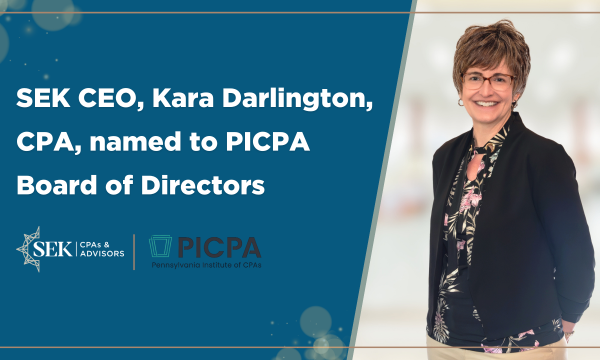
Kara Darlington, CEO, Named to PICPA Board of Directors
Kara Darlington, CPA, Chief Executive Officer (CEO) of SEK, CPAs & Adviso

What You Need to Know About the Qualified Tip Income Final Regulations
Tipping has long been a key part of income for many workers, but until now, it hasn’t come with much in the way of tax relief.

Fine-Tuning Your Tax Withholding After Filing Your Return
Many taxpayers discover at filing time that their tax payments during the year didn’t align with their actual liability—with either too much or too little being withheld from their paychecks.

Still Waiting on Your ERC Claim? Time Is Running Out—Take Action Now
If you filed a claim for the Employee Retention Credit (ERC) and still haven’t been paid, you are not alone.

How Your Nonprofit Can Move Beyond Feast-or-Famine Fundraising
In the early days, many nonprofits rely on bursts of fundraising activity—short campaigns that bring in funds, followed by long, quiet stretches. However, as an organization matures, this stop-and-start approach can limit growth and stability.

How Cost Segregation Studies Can Reveal Substantial Tax Savings
Businesses that own commercial real property may be sitting on an overlooked treasure chest of tax savings—and a cost segregation study could be the key to unlocking it.

The Meaning of These Common Estate Planning Terms
Estate planning can be overwhelming. One reason is that it has a language all its own. While you may be familiar with common terms such as “will” or “executor,” you may not be as certain about others.

Why Incorrect Categorizations in QuickBooks Online Could Be Hurting Your Business
Categorizing transactions incorrectly can have a major impact on every element of your accounting files.

Accountable Plans: A Smarter Way for Nonprofits to Reimburse Expenses
Accountable plans remain the most tax-efficient way for nonprofits to reimburse employee business expenses.